
Every few years the cloud security industry mints a new acronym. CSPM, CWPP, CIEM, CNAPP, ASPM — the alphabet soup is now thick enough that even security leaders struggle to explain where one category ends and the next begins. The confusion is not academic. Buy the wrong tool and you end up with overlapping licenses, blind spots between products, and a dashboard for every letter of the alphabet but no single answer to the only question that matters: what is actually at risk right now, and what do we fix first?
This post untangles the three foundational terms — CSPM, CWPP, and CNAPP — explains how they relate, and offers a practical way to decide what your organization needs.
Start with what you are protecting
Cloud risk lives in a few distinct places, and each acronym grew up defending one of them:
- The configuration of your cloud accounts — IAM policies, storage buckets, security groups, encryption settings. This is the control plane.
- The workloads running inside those accounts — virtual machines, containers, serverless functions, and the vulnerable packages and malware they carry. This is the data plane.
- The identities and permissions that tie users and machines to everything above.
Keep that map in mind and the categories stop being marketing labels and start being answers to "which layer does this defend?"
CSPM: securing the cloud configuration
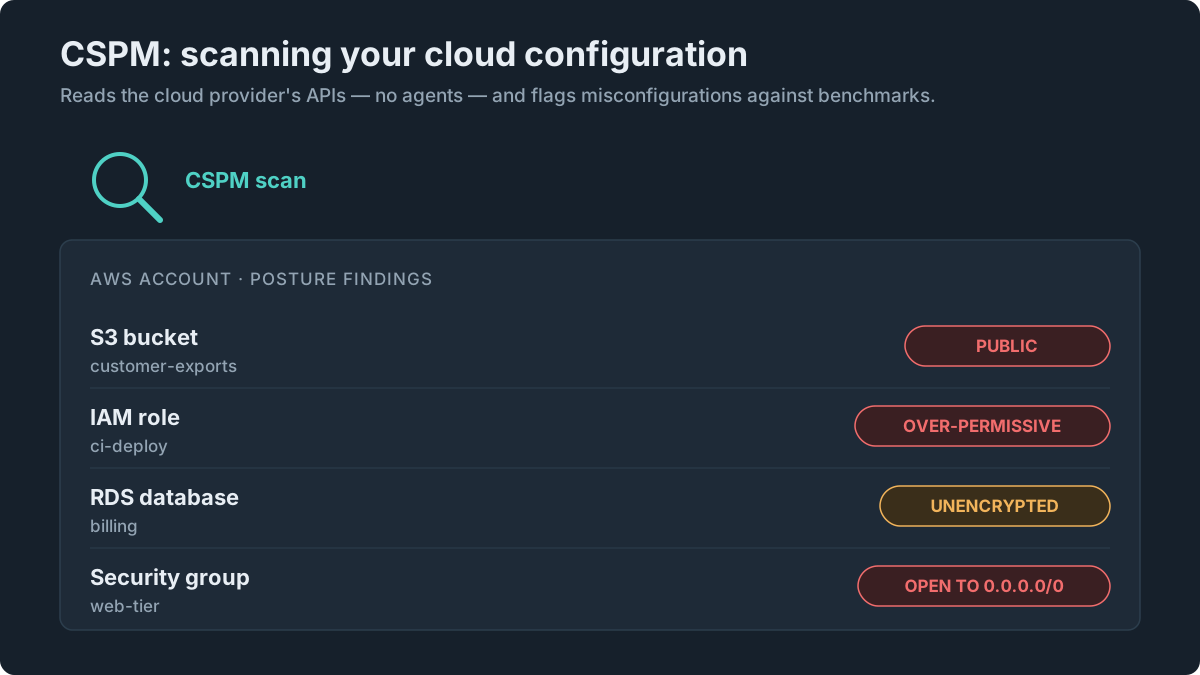
Cloud Security Posture Management (CSPM) continuously inspects your cloud accounts for misconfigurations and compliance violations. A public S3 bucket, an over-permissive IAM role, an unencrypted database, a security group open to 0.0.0.0/0 — CSPM finds these by reading the cloud provider's APIs and comparing your settings against benchmarks like the CIS Benchmarks, PCI DSS, or your own policies.
Misconfiguration remains the number-one cause of cloud breaches, which is why CSPM is usually the first cloud security tool an organization adopts. It is agentless, quick to deploy, and maps neatly to compliance obligations. What CSPM does not do is look inside the workload — it will tell you a server is exposed to the internet, but not that the software on that server has a critical vulnerability.
CWPP: securing the workloads
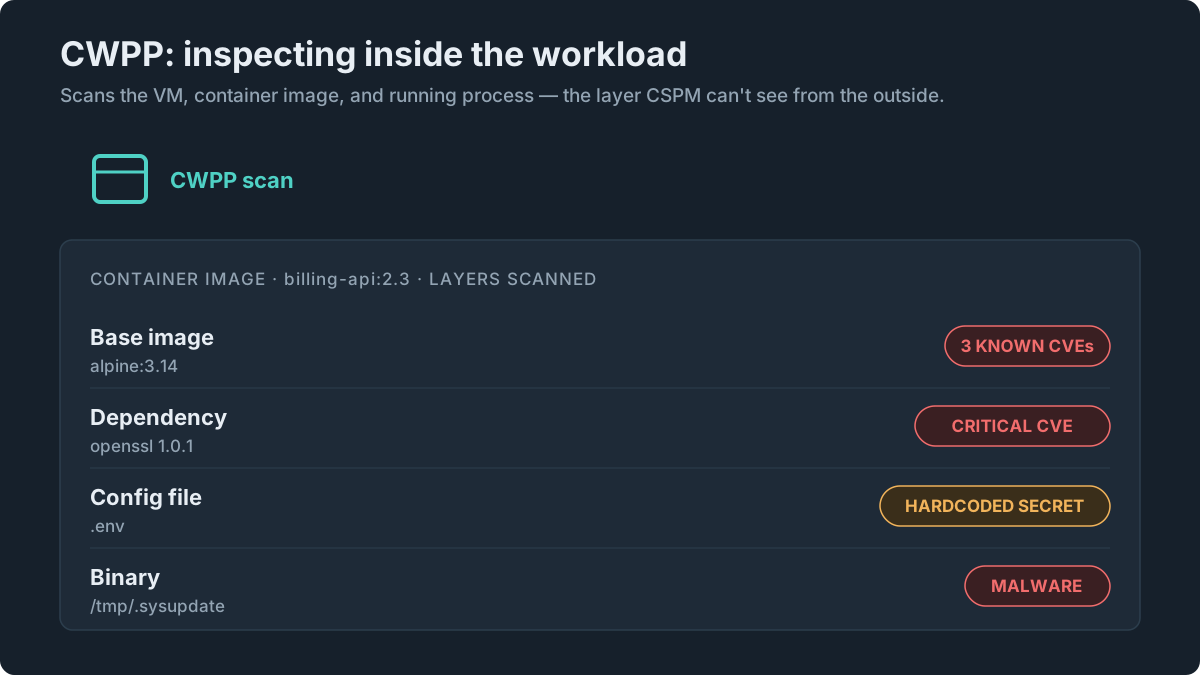
Cloud Workload Protection Platform (CWPP) covers exactly that gap. It secures the compute itself — scanning virtual machines, containers, and functions for vulnerable packages, embedded secrets, malware, and risky runtime behavior. Where CSPM reads the cloud's configuration, CWPP inspects the operating system, the container image, and the running process.
CWPP is what tells you that the exposed server is running a version of OpenSSL with a known CVE, or that a container image shipped to production carries a hardcoded API key. It is essential, but on its own it lacks the account-level context: it can see the vulnerable package but not that the host it lives on is also publicly reachable and holds admin credentials.
CNAPP: putting the pieces together
By 2021 most teams were running a CSPM tool, a CWPP tool, a separate vulnerability scanner, and often a standalone entitlements (CIEM) product — each with its own console, its own severity scale, and no shared context. Analysts coined Cloud-Native Application Protection Platform (CNAPP) to describe the consolidation: one platform that combines CSPM, CWPP, CIEM, and often infrastructure-as-code and code scanning into a single system.
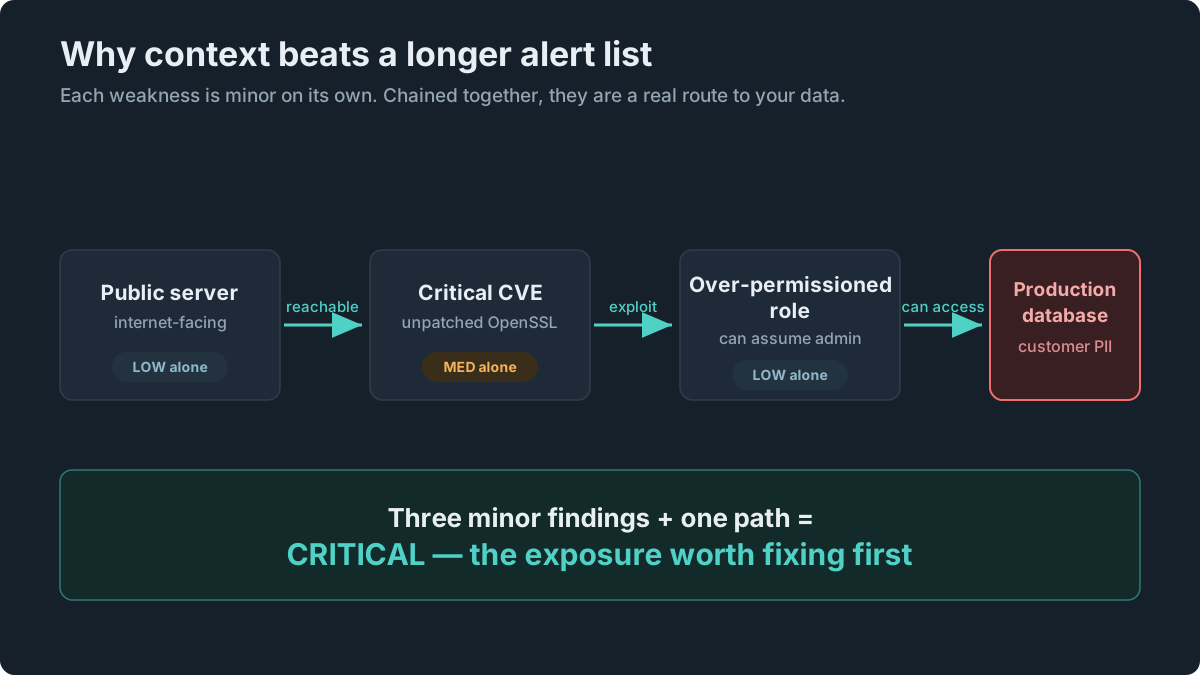
The value of a CNAPP is not that it bundles the features — it is that it correlates them. A public server is a low priority. A critical vulnerability is a medium priority. But a public server running a critical vulnerability, reachable from the internet, holding an over-permissioned role that can reach your production database — that is the toxic combination worth waking someone up for. Only a platform that sees configuration, workload, and identity together can draw that line. This is the reasoning behind attack-path analysis, where the platform chains individual weaknesses into the actual route an attacker would take.
So which do you actually need?
A quick decision guide:
- Just starting, compliance-driven? Begin with CSPM. It delivers the fastest visibility and maps directly to audit requirements.
- Running significant workloads in containers or VMs? Add CWPP so vulnerabilities and secrets inside the workload don't go unseen.
- Juggling three or more separate tools and drowning in unprioritized alerts? This is the signal to consolidate onto a CNAPP. The goal is fewer consoles and, more importantly, a single prioritized view of risk.
The trap to avoid is treating these as a checklist of products to buy. The acronyms describe capabilities, not shopping-cart items. The organizations that get cloud security right are not the ones with the most tools — they are the ones whose tools share context, so a finding in one layer is understood in light of every other.
Consolidation without the blind spots
This is exactly the problem the Offload Platform was built to solve: one risk view across cloud configuration, workloads, containers, code, and compliance, with attack-path context so you fix the exposures that actually chain into a breach — not the loudest alert. If you are currently comparing consolidated platforms, our side-by-side comparisons break down how the major CNAPP vendors differ in practice.
For related reading, see our guides on the Zero Trust security model and applying the NIST Cybersecurity Framework 2.0 — both pair naturally with a strong cloud security posture.